
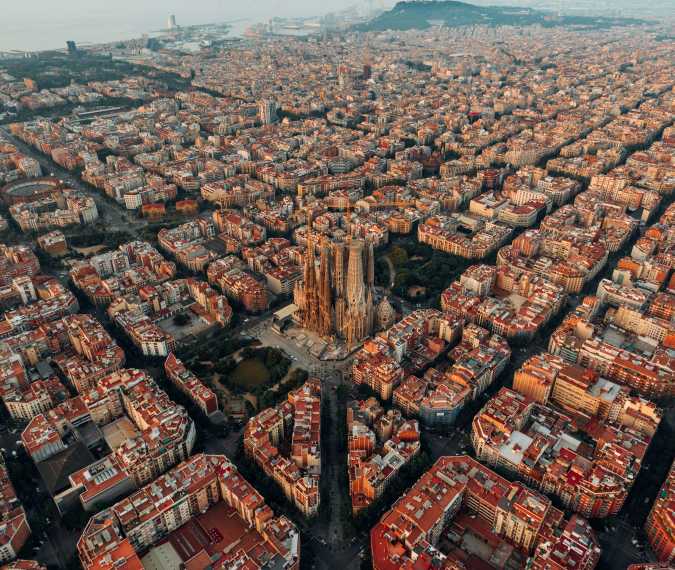
Popular European destination declares: 'Not one tourist more'
Barcelona is stepping up its efforts to control overtourism, with city authorities making it clear that attracting ever-growing numbers of visitors is no longer part of the plan.
The hugely popular Spanish destination has spent years looking for ways to balance its successful tourism industry with the everyday needs of people who live there. Now, officials are signaling that Barcelona may have effectively reached its desired visitor ceiling.
José Antonio Donaire, Barcelona's commissioner for sustainable tourism, has summarized the city's new direction with a striking message: "Not one tourist more."
Barcelona Wants to Limit Tourism Growth
Barcelona welcomed around 15.7 million tourists in 2025, according to Donaire, who indicated that the city considers roughly 16 million visitors to be the upper limit.
The objective isn't to bring tourism to an end. Instead, Barcelona wants to move away from a model based on continuously increasing visitor numbers and focus more heavily on managing the millions of travelers who already come to the city.
The strategy is part of a much longer effort to address the consequences of mass tourism. Barcelona introduced a moratorium on the construction of new hotels in 2017, and authorities have continued introducing measures designed to reduce pressure on housing, transportation and heavily visited neighborhoods.
Cruise Visitors Could Face Higher Taxes
Cruise tourism is one of the areas receiving particular attention.
Passengers who stop in Barcelona for less than 12 hours could eventually pay combined tourism taxes reaching €30.
Following a July 15 committee meeting, officials moved toward introducing a municipal charge of up to €24 for short-stay cruise passengers. That would be considerably higher than an earlier proposal of €8.
Barcelona Mayor Jaume Collboni had previously proposed increasing the overnight charge for cruise passengers from €4 to €8.
Tourist accommodation has also become more expensive from a taxation standpoint. From April 1, Barcelona substantially increased the tax charged to hotel guests, adding another financial measure to the city's broader tourism-management strategy.
Why Barcelona Is Fighting Overtourism
Barcelona's popularity has delivered enormous economic benefits, but it has also created challenges for residents.
Catalonia, the Spanish region that includes Barcelona, received approximately 20.1 million international tourists in 2025, representing a small increase compared with the previous year.
For Barcelona residents, however, the debate is about more than visitor numbers.
Housing affordability has become a particularly sensitive issue, alongside overcrowded public transport and congestion in historic neighborhoods. Short-term tourist accommodation has also faced criticism as locals argue that apartments that could otherwise house residents are being redirected toward visitors.
These concerns have helped turn overtourism into one of Barcelona's most controversial political and social issues.
Residents Have Taken Their Frustration to the Streets
The tension became particularly visible during anti-tourism demonstrations in Barcelona.
Thousands of residents joined protests, with banners carrying messages such as "One more tourist, one less resident" and "Tourist go home."
Some protesters attracted international attention by spraying visitors with water guns. Although largely symbolic, the unusual protest demonstrated how strongly some residents feel about the transformation of their neighborhoods.
One Barcelona resident involved in the protests, Andreu Martínez, argued that the city had increasingly been given over to tourists. He also said his own rent had risen by more than 30% while apartments around his neighborhood were being converted into short-term holiday accommodation.
For residents sharing these concerns, the issue isn't necessarily tourism itself. It is the effect that extremely high visitor numbers can have on housing, local businesses and daily life.
Barcelona Doesn't Want Tourists to Disappear
Despite the strong language surrounding the city's tourism strategy, Barcelona isn't attempting to shut its doors to international travelers.
The goal is instead to change what tourism looks like.
City officials would like to attract visitors interested in areas such as culture and business while maintaining neighborhoods that continue to function primarily as places where people actually live.
Donaire has argued that residents should still be able to find ordinary necessities—from bread and books to basic household goods—in their own neighborhoods.
That philosophy also has potential benefits for travelers. A Barcelona dominated entirely by souvenir stores and businesses aimed exclusively at visitors risks losing some of the authenticity that attracted tourists in the first place.
What Does This Mean for Travelers Visiting Barcelona?
Barcelona remains one of Europe's major destinations, and there is no suggestion that tourists are no longer welcome.
However, travelers should expect the cost and regulation of tourism to continue evolving, particularly when it comes to accommodation and cruise visits.
The city's direction is increasingly clear: rather than pursuing record-breaking tourist numbers every year, Barcelona wants to manage tourism within limits that officials believe the city can sustain.
For anyone planning a future trip, that could mean higher tourism taxes and tighter rules. But Barcelona hopes those measures will ultimately produce a city that works better for residents while remaining attractive to the millions of people who travel there every year.

